
Modern public transport systems depend on one fundamental element: reliable, structured data about where transport services start, stop, and connect. These locations-bus stops, railway stations, metro stations, and terminals-are known as transport access nodes, and they form the backbone of journey planning, passenger information systems, and multimodal mobility services.
Over the past two years, Tripco has been developing the Bulgarian Stops Register (BSR)-a structured national dataset of transport access nodes designed to support modern mobility services and align Bulgaria with European mobility data standards.
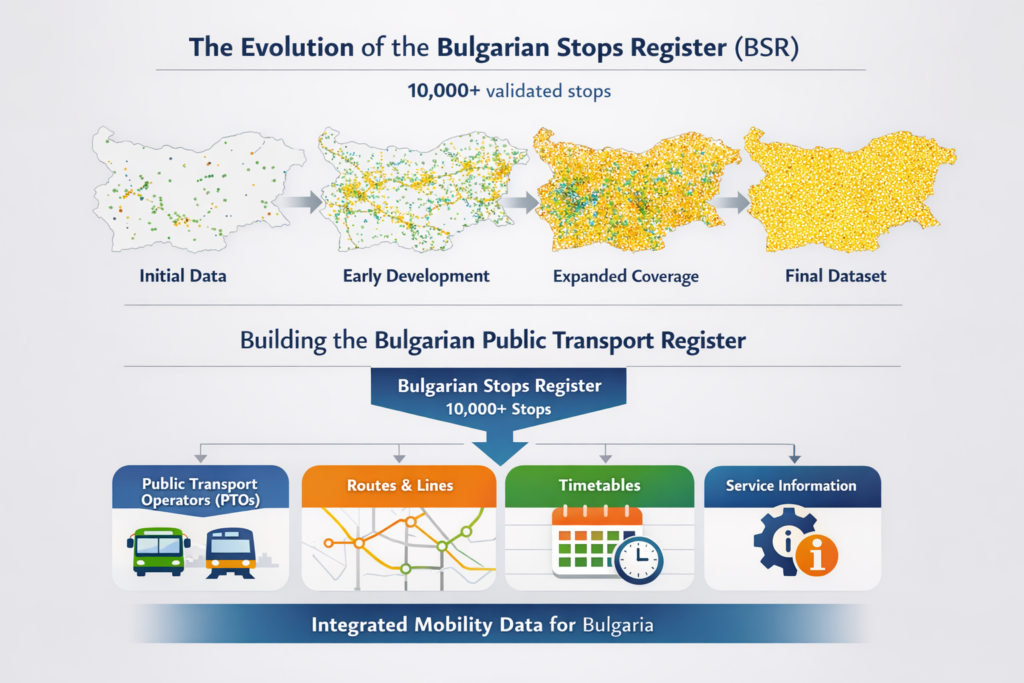
Today, the dataset includes more than 10,000 validated stops across the country, structured and maintained in accordance with NeTEx, the European standard for public transport data exchange.
Why a Stops Register Matters
Every digital mobility service relies on a consistent and clearly defined network of stops and stations. Journey planners, ticketing systems, and passenger information platforms all require reliable and uniquely identified locations where transport services operate.
Without a harmonised stops register, transport data becomes fragmented and difficult to integrate across operators, regions, and transport modes.
The Bulgarian Stops Register addresses this challenge by creating a standardised national dataset of transport access nodes. This dataset serves as the foundation for modern digital mobility services in Bulgaria.
From Fragmented Data to a Structured Dataset
When this work began, information about transport stops in Bulgaria was highly fragmented and inconsistent. Data existed across different sources and formats, often lacking standard identifiers, validation processes, or consistent structure.
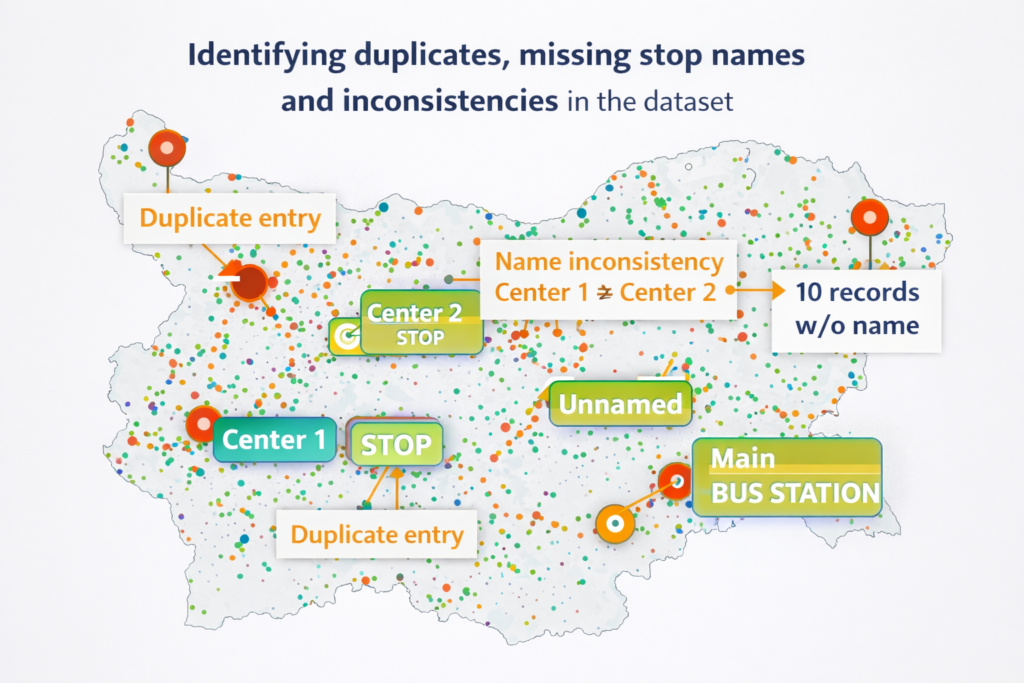
Tripco began by carefully investigating the available information, identifying gaps, duplicates, and inconsistencies. Building a reliable stops register required much more than simply collecting coordinates.
The work involved:
- identifying and validating stop locations
- resolving duplicate or conflicting records
- structuring stops into logical transport nodes
- assigning consistent identifiers
- aligning the dataset with the NeTEx data model
Over time, the map of transport nodes has evolved significantly as the dataset expanded and improved through continuous validation and standardisation.
A Collaborative but Challenging Process
Rather than creating data from scratch, Tripco’s work has focused on carefully reviewing, validating, updating, and standardising information that already existed so that it can be used reliably within modern digital mobility systems.
During this process, multiple sources were analysed, records were compared, inconsistencies were resolved, and the data was structured according to the NeTEx standard.
The Bulgarian Stops Register therefore represents an ongoing effort to organise and improve existing transport stop information, creating a foundation that can support future national mobility data infrastructure.
The Foundation for the Bulgarian Public Transport Register
The Bulgarian Stops Register is only the first step in building a national mobility data ecosystem.
Once a harmonised register of access nodes exists, it enables the development of the Bulgarian Public Transport Register, which will contain structured information about:
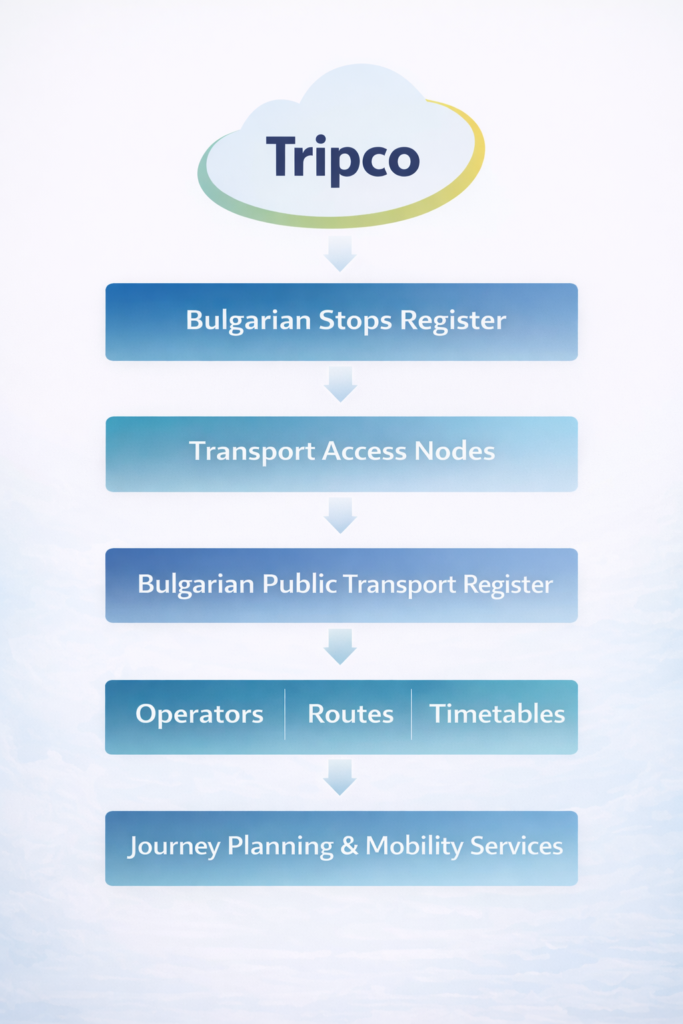
- public transport operators
- routes and service lines
- timetables
- service calendars
Together, these datasets form the digital infrastructure required for modern journey planning, passenger information systems, and multimodal mobility platforms.
Why Tripco Is Building This
Tripco’s goal is to improve connectivity and accessibility across Bulgaria through better use of public transport.
Reliable data infrastructure enables better journey planning, clearer information for passengers, and stronger integration between transport services. When public transport becomes easier to understand and use, it becomes a more attractive option for daily travel.
The Bulgarian Stops Register is a critical step toward building that future.
With more than 10,000 structured and validated stops, the dataset already represents the most comprehensive and standardised collection of transport access nodes in Bulgaria-and the foundation for the next generation of mobility services.
Looking Ahead
The development of the Bulgarian Stops Register marks an important step toward building modern mobility data infrastructure in Bulgaria. As the dataset continues to evolve, Tripco will continue working on the next stage: developing the Bulgarian Public Transport Register, enabling more advanced journey planning, data integration, and mobility services across the country.
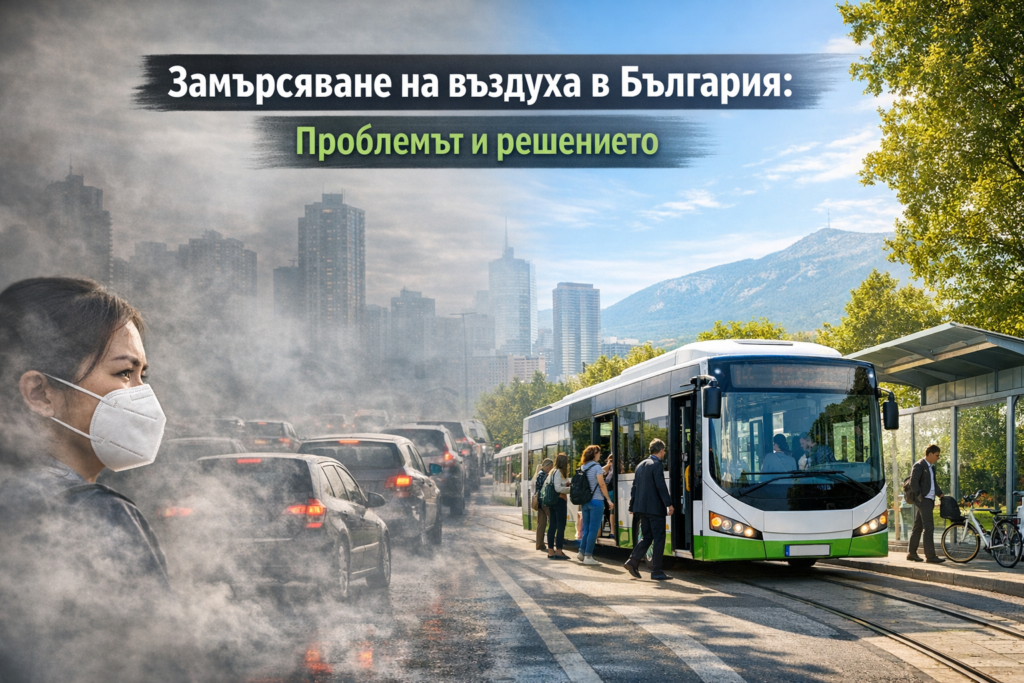
Намаляването на автомобилния трафик е един от най-ефективните начини за подобряване на качеството на въздуха в градовете.
Но хората избират колата си поради удобство, предвидимост и сигурност.
Следователно решението не е само в ограниченията, а в подобряване на достъпността и ефективността на обществения транспорт.
Как Tripco ще спомогне за решаването на проблема
Tripco е национален проект за дигитална трансформация на обществения транспорт в България.
Нашата цел е:
1️⃣ Да направим обществения транспорт по-удобен от автомобила
- Мултимодално планиране на маршрути
- Интеграция на различни оператори
- Мобилно закупуване на билети
- Намаляване на несигурността и чакането
Когато пътуването с обществен транспорт стане лесно, хората реално започват да го предпочитат.
2️⃣ Да предоставим данни за по-добро управление
Tripco изгражда национален регистър на спирки и разписания и създава централизирана база данни.
Това позволява:
- оптимизация на линии
- анализ на натовареността
- по-добро разпределение на ресурси
- намаляване на празни курсове
По-ефективната транспортна система означава по-малко излишни емисии и по-ниски социални разходи.
Какво означава реално намаляване на замърсяването?
Дори 10% подобрение в качеството на въздуха би означавало:
- по-малко хоспитализации
- по-малко болнични
- по-висока продуктивност
- повече активни години живот
- по-нисък натиск върху здравната система
В мащаба на София това означава стотици милиони евро потенциално спестени всяка година.
По-чист въздух, по-здрава икономика, по-добър живот
Замърсяването на въздуха в България струва скъпо – в пари, здраве и човешки потенциал.
Tripco има амбицията да бъде част от решението, като ускори прехода към по-ефективен и интегриран обществен транспорт.
Всеки преминал от автомобил към обществен транспорт означава:
по-малко емисии,
по-чист въздух,
по-здрави хора,
по-силни градове.
Именно това е зелената трансформация в действие.
След две години упорити усилия, с гордост споделяме, че София направи голяма крачка напред – градът вече отваря данните за градската мобилност за всички. Това поставя София наравно с повечето европейски страни, които вече предоставят такъв достъп, и бележи повратна точка в развитието на иновациите в градската мобилност.
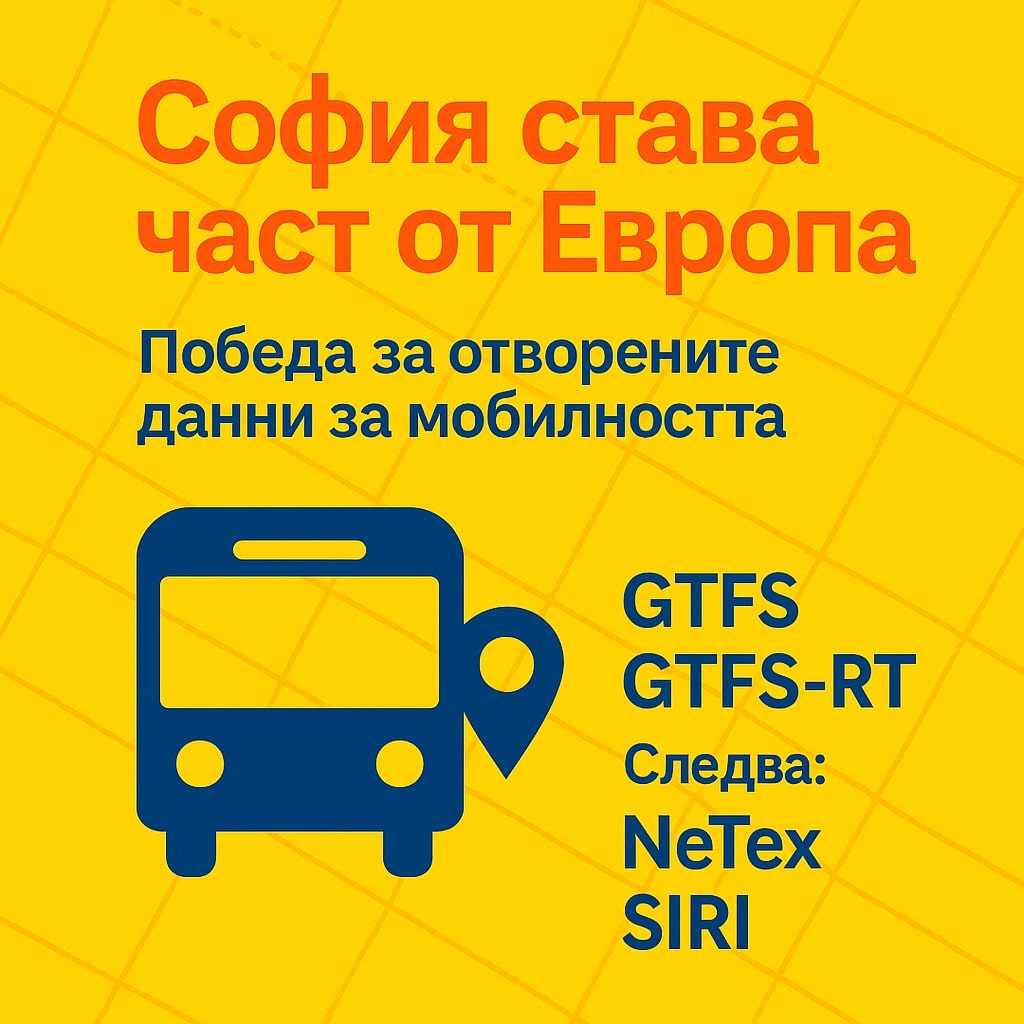
Процес, поведен от Tripco, спечелен от всички!
Това постижение не е случайно. Преди две години Tripco започна разговорите с Центъра за градска мобилност (ЦГМ) за значението на отворените транспортни данни. В началото нашите официални запитвания останаха без отговор. Реалният напредък започна едва преди година, когато се срещнахме с кмета на София, Васил Терзиев, който разбра важността на темата и подкрепи инициативата.
Оттам нататък процесът беше дълъг и сложен. Зам.-кметът по дигитализация Иван Гойчев, заедно с общинския съветник Симеон Ставрев, подготвиха официалния доклад. Докладът трябваше да бъде разгледан и гласуван от Столичния общински съвет. През май 2025-та, 53 общински съветници гласуваха „за“, което отвори пътя процедурата да започне.
И ето че днес най-накрая всички имаме достъп до данните за мобилността на София.
Защо е важно?
Достъпът до тези набори от данни – в GTFS за статична информация и GTFS-RT за данни в реално време – е основата за създаване на съвременни транспортни решения. С отворени данни разработчици, иноватори и граждани могат да изграждат по-умни инструменти за планиране на пътувания, решения за билетиране и услуги, които улесняват придвижването в града.
Напред
В Tripco сме истински оптимисти. Това постижение доказва, че с постоянство, сътрудничество и добра институционална воля, нещата могат да се променят към по-добро. Благодарни сме на всички, които допринесоха за този процес – без вас това нямаше да се случи.
А нашата работа не спира дотук. София, ако имате нужда от помощ при конвертирането на данните си в NeTEx или SIRI за пълно съответствие с делегираните изисквания на ЕС, свържете се с нас – ние от Tripco сме тук, за да помогнем!
After two years of persistent effort, we are proud to share that Sofia has finally taken a major step forward – the city is now opening its public transport mobility data to everyone. This puts Sofia on the same page as most European countries that already provide such access, and marks a turning point for innovation in urban mobility.
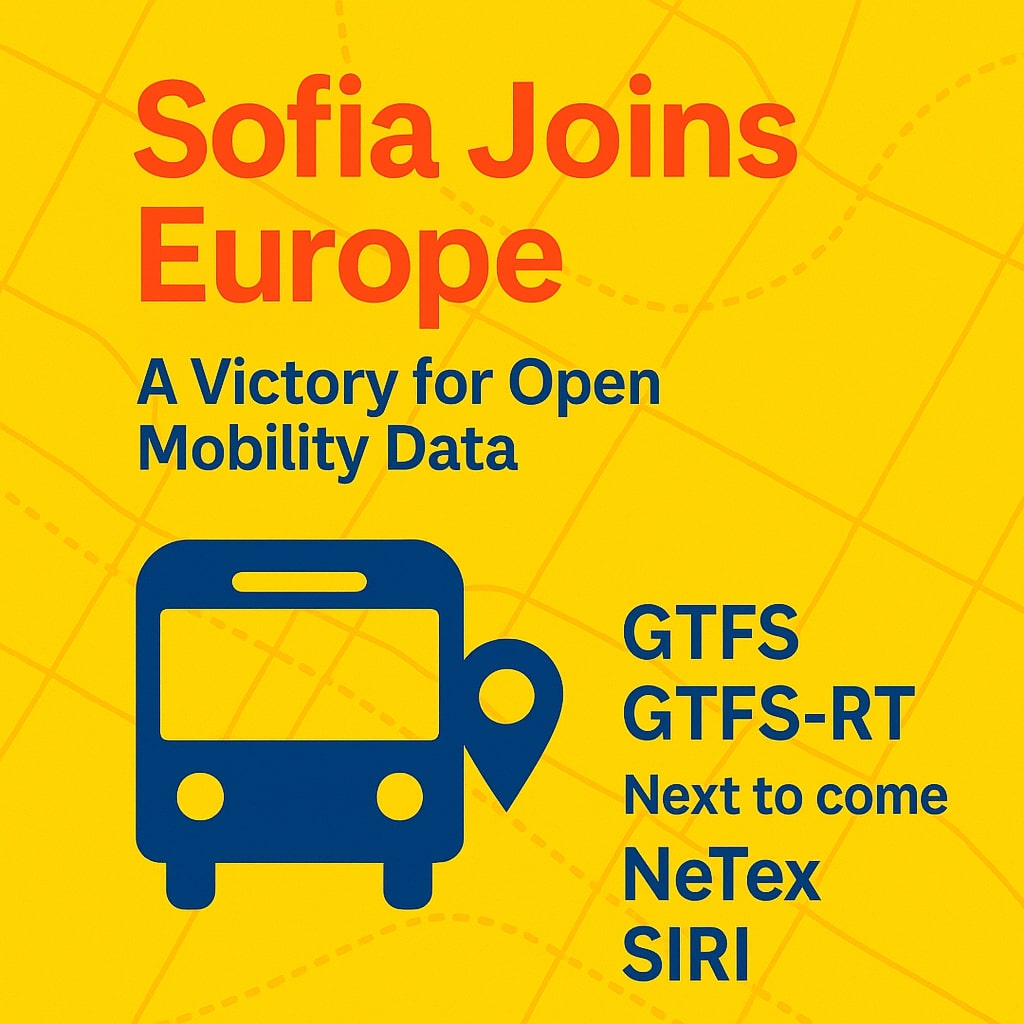
A process led by Tripco, won by all!
This achievement is not accidental. Two years ago, Tripco initiated the conversation with the Center for Urban Mobility (ЦГМ) about the importance of open transport data. At first, our official requests went unanswered. Real progress began only a year ago, when we met with the Mayor of Sofia, Vasil Terziev, who recognized the importance of the matter and gave his support.
Following that, the process was lengthy and complex. Deputy Mayor for Digitalization, Ivan Goychev, together with City Councillor Simeon Stavrev, prepared the official report. This report had to be reviewed and voted on by the City Council. In May, 53 councillors voted in favor(complete support), opening the way for the procedure to finally move forward.
And now, at last, everyone has access to Sofia’s mobility data.
Why It Matters
Access to these datasets – in GTFS for static information and GTFS-RT for real-time updates – is the foundation for developing modern transport solutions. With open data, developers, innovators, and citizens can build smarter journey planning tools, ticketing solutions, and services that improve how we all move across the city.
Looking Ahead
At Tripco, we feel truly optimistic. This milestone proves that with persistence, collaboration, and good institutional will, things can change for the better. We are grateful to everyone who contributed to this process – without you, this would not have happened.
And our work does not stop here. Sofia, if you need help converting your data into NeTEx or SIRI formats to achieve full compliance with EU delegated regulations, get in touch – we’re here to help.
Bulgaria, known for its rich history and stunning landscapes, is now embarking on a journey towards smart urbanization, with a particular focus on revolutionizing transportation and mobility. In this article, we’ll explore the innovative steps Bulgaria is taking to transform its cities into smart, efficient, and eco-friendly urban centers.
1. Intelligent Transport Systems (ITS)
Bulgaria has been actively implementing Intelligent Transport Systems (ITS) to enhance the efficiency and safety of its transportation networks. These systems leverage advanced technologies like real-time traffic monitoring, smart traffic lights, and integrated public transport solutions. By optimizing traffic flow, reducing congestion, and improving road safety, Bulgaria is making its cities more accessible and convenient for residents and visitors.
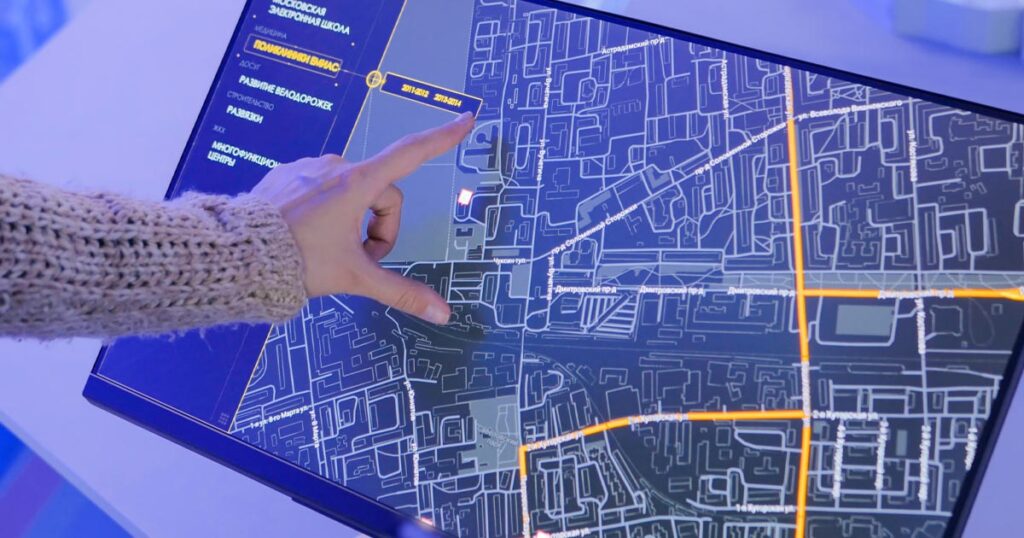
2. Sustainable Mobility Initiatives
The pursuit of sustainable mobility is a key focus in Bulgaria’s smart city journey. Cities like Sofia and Plovdiv are investing in eco-friendly public transportation options, including electric buses and trams. Additionally, bike-sharing programs and pedestrian-friendly zones are becoming increasingly prevalent, encouraging greener and healthier commuting alternatives.
3. Data-Driven Decision Making
Data plays a crucial role in the development of smart cities. Bulgaria is harnessing data analytics to make informed decisions regarding transportation and mobility. By collecting and analyzing data from various sources, such as traffic sensors and GPS systems, city planners can optimize routes, reduce emissions, and improve overall transportation efficiency.
4. Smart Parking Solutions
Parking woes are common in many urban areas, but Bulgaria is addressing this issue with smart parking solutions. These systems enable drivers to locate available parking spaces through mobile apps or digital signage. By reducing the time spent searching for parking spots, smart parking solutions contribute to decreased traffic congestion and emissions.
5. Challenges and Opportunities
While Bulgaria has made significant strides in embracing smart city technologies, challenges remain. Issues such as limited funding, public awareness, and data privacy concerns need to be addressed. However, these challenges also present opportunities for innovation and collaboration among government, businesses, and citizens to create smarter, more sustainable cities.
In conclusion, Bulgaria is on a transformative journey towards smart cities that prioritize efficient and sustainable transportation and mobility solutions. By embracing Intelligent Transport Systems, promoting sustainable commuting options, and leveraging data-driven insights, Bulgaria is paving the way for a more accessible, eco-friendly, and connected urban future.
As the country continues to invest in smart city initiatives, it’s positioning itself as a leader in the region, setting an example for how cities can thrive in the digital age while preserving their unique cultural heritage. Bulgaria’s commitment to innovation and sustainability promises a brighter, smarter future for its cities and citizens alike.
Title: Smart Cities in Bulgaria: Revolutionizing Transportation and Mobility
Bulgaria, known for its rich history and stunning landscapes, is now embarking on a journey towards smart urbanization, with a particular focus on revolutionizing transportation and mobility. In this article, we’ll explore the innovative steps Bulgaria is taking to transform its cities into smart, efficient, and eco-friendly urban centers.
1. Intelligent Transport Systems (ITS)
Bulgaria has been actively implementing Intelligent Transport Systems (ITS) to enhance the efficiency and safety of its transportation networks. These systems leverage advanced technologies like real-time traffic monitoring, smart traffic lights, and integrated public transport solutions. By optimizing traffic flow, reducing congestion, and improving road safety, Bulgaria is making its cities more accessible and convenient for residents and visitors.
2. Sustainable Mobility Initiatives
The pursuit of sustainable mobility is a key focus in Bulgaria’s smart city journey. Cities like Sofia and Plovdiv are investing in eco-friendly public transportation options, including electric buses and trams. Additionally, bike-sharing programs and pedestrian-friendly zones are becoming increasingly prevalent, encouraging greener and healthier commuting alternatives.
3. Data-Driven Decision Making
Data plays a crucial role in the development of smart cities. Bulgaria is harnessing data analytics to make informed decisions regarding transportation and mobility. By collecting and analyzing data from various sources, such as traffic sensors and GPS systems, city planners can optimize routes, reduce emissions, and improve overall transportation efficiency.
4. Smart Parking Solutions
Parking woes are common in many urban areas, but Bulgaria is addressing this issue with smart parking solutions. These systems enable drivers to locate available parking spaces through mobile apps or digital signage. By reducing the time spent searching for parking spots, smart parking solutions contribute to decreased traffic congestion and emissions.
5. Challenges and Opportunities
While Bulgaria has made significant strides in embracing smart city technologies, challenges remain. Issues such as limited funding, public awareness, and data privacy concerns need to be addressed. However, these challenges also present opportunities for innovation and collaboration among government, businesses, and citizens to create smarter, more sustainable cities.
In conclusion, Bulgaria is on a transformative journey towards smart cities that prioritize efficient and sustainable transportation and mobility solutions. By embracing Intelligent Transport Systems, promoting sustainable commuting options, and leveraging data-driven insights, Bulgaria is paving the way for a more accessible, eco-friendly, and connected urban future.
As the country continues to invest in smart city initiatives, it’s positioning itself as a leader in the region, setting an example for how cities can thrive in the digital age while preserving their unique cultural heritage. Bulgaria’s commitment to innovation and sustainability promises a brighter, smarter future for its cities and citizens alike.
Public transportation plays a vital role in the daily lives of millions of people in Bulgaria. As cities grow and urbanization continues, the need for efficient, reliable, and sustainable public transport becomes increasingly important. To address the challenges and enhance the public transport experience for Bulgarians, here are 10 ways to improve the country’s public transportation system:
1. Integrated Ticketing System: Implementing an integrated ticketing system that allows passengers to use a single ticket for various modes of transportation (bus, tram, metro) and across different regions would simplify travel and encourage greater use of public transport.
2. Real-Time Information: Provide real-time updates on the arrival times of buses, trams, and trains through mobile apps and digital displays at stops. This would minimize waiting times and enhance the overall commuting experience.
3. Infrastructure Upgrades: Invest in upgrading and expanding public transport infrastructure, including dedicated bus lanes, modernized terminals, and comfortable waiting areas. Upgraded infrastructure can lead to improved efficiency and passenger satisfaction.
4. Accessibility Improvements: Ensure that public transport is accessible to everyone, including people with disabilities and the elderly. Installing ramps, elevators, and clear signage can make public transport more inclusive.
5. Environmental Sustainability: Introduce eco-friendly vehicles and technologies to reduce emissions and minimize the environmental impact of public transport. Electric buses, for example, can contribute to cleaner air and a healthier environment.
6. Customer Engagement: Engage with the public to gather feedback and insights on their needs and preferences. Surveys, town hall meetings, and digital platforms can help transportation authorities understand and address passenger concerns.
7. Safety and Security Measures: Enhance safety and security on public transport through increased surveillance, well-lit stations, and the presence of staff or security personnel. This would help passengers feel safer during their journeys.
8. Affordable Pricing: Offer affordable fare options to make public transport an attractive choice for all income groups. Subsidies, discounts for students and seniors, and flexible pricing plans can encourage greater ridership.
9. Public Awareness Campaigns: Educate the public about the benefits of using public transport, including reduced traffic congestion, cost savings, and environmental conservation. Public awareness campaigns can shift attitudes and behaviours.
10. Collaboration with Innovators: Collaborate with technology and innovation experts to develop smart solutions for public transport challenges. From route optimization algorithms to smart payment systems, innovation can significantly enhance the efficiency of public transport.
In conclusion, improving public transport in Bulgaria requires a holistic approach that addresses infrastructure, technology, accessibility, and affordability. By implementing these 10 strategies, Bulgaria can create a public transportation system that meets the needs of its citizens, reduces congestion, and contributes to a sustainable and vibrant urban environment.
In an era marked by rapid technological advancements and evolving urban landscapes, the necessity to modernize and digitize public transportation systems has become more critical than ever before. From bustling metropolises to smaller towns, the challenges facing public transport are universal, transcending borders and impacting the lives of citizens. By embracing innovation and embracing a digital transformation, cities can revolutionize their public transport systems, paving the way for enhanced efficiency, reduced congestion, and a greener future.
Challenges of Traditional Public Transport Systems
Traditional public transport systems often grapple with a myriad of challenges that hinder their effectiveness and attractiveness to commuters. Some of these issues include:
- Inefficiency and Unreliability: Outdated systems can lead to irregular schedules, long waiting times, and unreliable service, resulting in frustrated commuters.
- Congestion and Pollution: Congested roads and outdated infrastructure contribute to traffic congestion and increased air pollution, adversely affecting the environment and public health.
- Lack of Integration: Disconnected transportation modes make it difficult for commuters to seamlessly switch between various modes, discouraging the use of public transport.
- Limited Accessibility: Insufficient accessibility for people with reduced mobility poses barriers to their participation in public transport.
- Paper-Based Ticketing: Traditional ticketing systems can be cumbersome, prone to errors, and environmentally unfriendly due to excessive paper usage.
Benefits of Modernization and Digitization
The transformation of public transport through modernization and digitization holds the promise of addressing these challenges and unlocking a multitude of benefits:
- Enhanced Efficiency: Digital platforms enable real-time data sharing between vehicles, transport authorities, and commuters. This leads to optimized routes, reduced travel times, and improved punctuality.
- Seamless Interconnectivity: Integrating various modes of transportation, such as buses, trains, trams, and shared mobility services, creates a seamless network that encourages multimodal travel.
- Reduced Congestion and Pollution: Smart traffic management systems powered by data analytics can mitigate congestion, leading to smoother traffic flow and decreased emissions, thus contributing to cleaner air and healthier cities.
- Improved Accessibility: Modernized transport systems can be designed with universal accessibility in mind, ensuring that everyone, including people with disabilities, can easily use and benefit from public transport.
- Mobile Ticketing and Cashless Payments: Digitizing ticketing processes through mobile apps simplifies the purchasing process, eliminates the need for physical tickets, and facilitates cashless payments, promoting convenience and reducing paper waste.
- Real-Time Information: Commuters can access real-time information about routes, schedules, and disruptions through mobile apps, allowing for better trip planning and informed decision-making.
- Environmental Sustainability: A well-structured modern transport system reduces individual car usage, thus contributing to a reduction in greenhouse gas emissions and fostering a more sustainable urban environment.
- Economic Growth: A robust public transport network can stimulate economic growth by improving access to jobs, education, and healthcare, while also reducing infrastructure costs associated with road maintenance.
Embracing the Future
The transformation of public transport is not just a luxury but a necessity. As cities grow and urbanization continues, the pressure on existing transportation systems will only increase. The road to modernization and digitization requires collaborative efforts between governments, private sector stakeholders, and technology innovators. Investments in smart infrastructure, data-driven decision-making, and user-centric solutions are key to creating public transport systems that meet the evolving needs of citizens.
In conclusion, the importance of modernizing and digitizing public transport cannot be overstated. By addressing the challenges of inefficiency, congestion, and limited accessibility, cities can create transportation networks that are efficient, environmentally sustainable, and user-friendly. The path forward involves embracing cutting-edge technologies and reimagining urban mobility to ensure a brighter future for all. As we look ahead, the transformation of public transport will undoubtedly play a pivotal role in shaping the livable and connected cities of tomorrow.
Transitioning from private vehicles to public transport offers a range of benefits that collectively contribute to a more sustainable and climate-friendly future:
- Reduced Greenhouse Gas Emissions: Public transport systems, like buses, trains, and trams, are generally more energy-efficient per passenger compared to individual cars. By sharing rides, emissions are significantly reduced, helping to combat climate change.
- Congestion Reduction: Public transport reduces traffic congestion, which leads to less idling in traffic jams and, subsequently, lower emissions. This promotes smoother traffic flow and reduces overall fuel consumption.
- Energy Efficiency: Public transport vehicles are designed to accommodate a larger number of passengers, making them more energy-efficient per capita. They make better use of limited road space, reducing the need for sprawling highways.
- Promotion of Sustainable Urban Development: Well-planned public transport systems encourage compact urban development, reducing the need for urban sprawl. This curtails the loss of natural habitats, minimizes the distance between homes and workplaces, and saves energy.
- Improved Air Quality: With fewer individual vehicles on the road, public transport leads to improved air quality in urban areas. This benefits public health by reducing respiratory illnesses and other air pollution-related ailments.
- Resource Conservation: Public transport requires fewer resources than individual car ownership, including less land for parking and fewer raw materials for vehicle production.
- Cost Savings: Public transport is often more cost-effective than owning and maintaining a private vehicle. By eliminating fuel, maintenance, and parking costs, individuals can save money while contributing to a cleaner environment.
- Community Building: Public transport encourages social interactions and a sense of community among passengers. It fosters a shared experience, reducing social isolation that can be associated with private car travel.
- Policy Lever for Change: Supporting public transport can influence policymakers to invest in sustainable transportation infrastructure, fostering a broader shift towards environmentally friendly urban planning.
Enhancing public transport utilization is essential for sustainable urban development and reducing environmental impact. Here are ten impactful strategies that can spur increased public transport usage:
1. Expanded Network: Extending public transport coverage to underserved areas ensures more people have convenient access, increasing its appeal as a viable option.
2. Frequency Improvement: Enhancing service frequency, particularly during peak hours, reduces waiting times and makes public transport a more time-efficient choice.
3. Affordable Fare Structure: Implementing fair and affordable pricing structures, coupled with discounts for specific groups like students and seniors, makes public transport financially attractive.
4. Modernized Infrastructure: Upgrading infrastructure, including clean vehicles, well-maintained stations, and comfortable waiting areas, enhances the overall travel experience.
5. Real-Time Information: Providing real-time updates on vehicle arrivals and service disruptions via mobile apps and digital displays minimizes uncertainty and improves passenger satisfaction.
6. Marketing Campaigns: Effective marketing highlighting the benefits of public transport, such as cost savings and reduced stress, can reshape public perception and encourage its use.
7. Incentive Programs: Loyalty programs that reward frequent travelers with benefits create a sense of community and loyalty among passengers.
8. First-Last Mile Connectivity: Incorporating modes like biking, walking, and ridesharing for easy access to public transport stops addresses the “last mile” challenge.
9. Educational Initiatives: Raising awareness about the environmental and personal benefits of public transport through school programs and community events can change mindsets.
10. Policy Support: Government policies like congestion pricing and tax incentives can make public transport more appealing economically, steering people towards sustainable mobility.
By implementing these ten strategies, cities can pave the way for a future where public transport becomes the preferred mode of travel, contributing to cleaner air, reduced congestion, and a more livable urban environment.