
Modern public transport systems depend on one fundamental element: reliable, structured data about where transport services start, stop, and connect. These locations-bus stops, railway stations, metro stations, and terminals-are known as transport access nodes, and they form the backbone of journey planning, passenger information systems, and multimodal mobility services.
Over the past two years, Tripco has been developing the Bulgarian Stops Register (BSR)-a structured national dataset of transport access nodes designed to support modern mobility services and align Bulgaria with European mobility data standards.
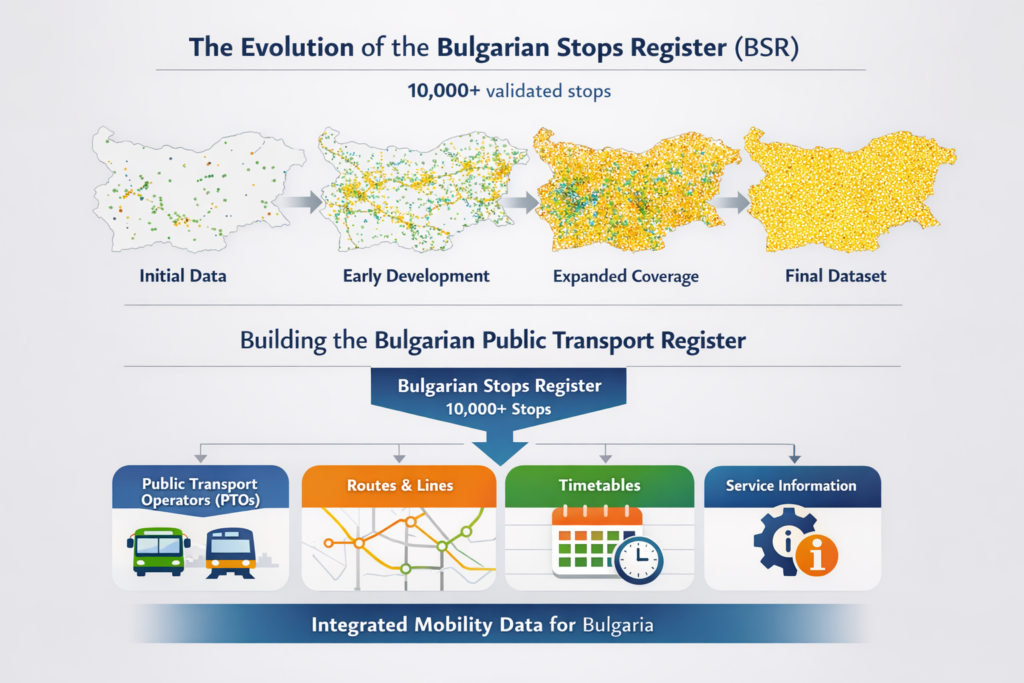
Today, the dataset includes more than 10,000 validated stops across the country, structured and maintained in accordance with NeTEx, the European standard for public transport data exchange.
Why a Stops Register Matters
Every digital mobility service relies on a consistent and clearly defined network of stops and stations. Journey planners, ticketing systems, and passenger information platforms all require reliable and uniquely identified locations where transport services operate.
Without a harmonised stops register, transport data becomes fragmented and difficult to integrate across operators, regions, and transport modes.
The Bulgarian Stops Register addresses this challenge by creating a standardised national dataset of transport access nodes. This dataset serves as the foundation for modern digital mobility services in Bulgaria.
From Fragmented Data to a Structured Dataset
When this work began, information about transport stops in Bulgaria was highly fragmented and inconsistent. Data existed across different sources and formats, often lacking standard identifiers, validation processes, or consistent structure.
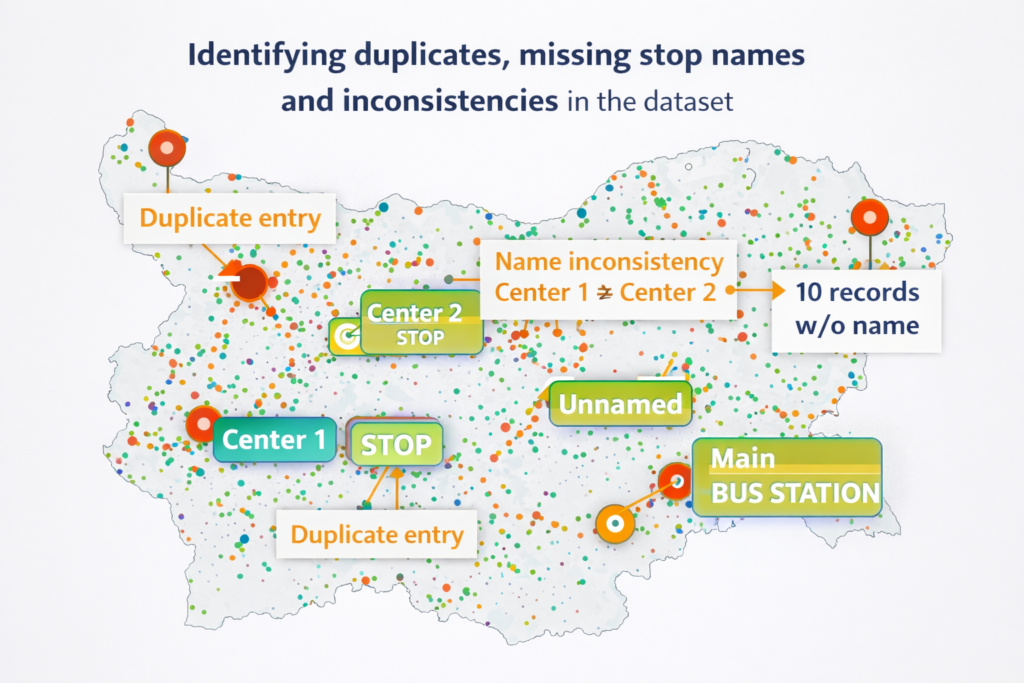
Tripco began by carefully investigating the available information, identifying gaps, duplicates, and inconsistencies. Building a reliable stops register required much more than simply collecting coordinates.
The work involved:
- identifying and validating stop locations
- resolving duplicate or conflicting records
- structuring stops into logical transport nodes
- assigning consistent identifiers
- aligning the dataset with the NeTEx data model
Over time, the map of transport nodes has evolved significantly as the dataset expanded and improved through continuous validation and standardisation.
A Collaborative but Challenging Process
Rather than creating data from scratch, Tripco’s work has focused on carefully reviewing, validating, updating, and standardising information that already existed so that it can be used reliably within modern digital mobility systems.
During this process, multiple sources were analysed, records were compared, inconsistencies were resolved, and the data was structured according to the NeTEx standard.
The Bulgarian Stops Register therefore represents an ongoing effort to organise and improve existing transport stop information, creating a foundation that can support future national mobility data infrastructure.
The Foundation for the Bulgarian Public Transport Register
The Bulgarian Stops Register is only the first step in building a national mobility data ecosystem.
Once a harmonised register of access nodes exists, it enables the development of the Bulgarian Public Transport Register, which will contain structured information about:
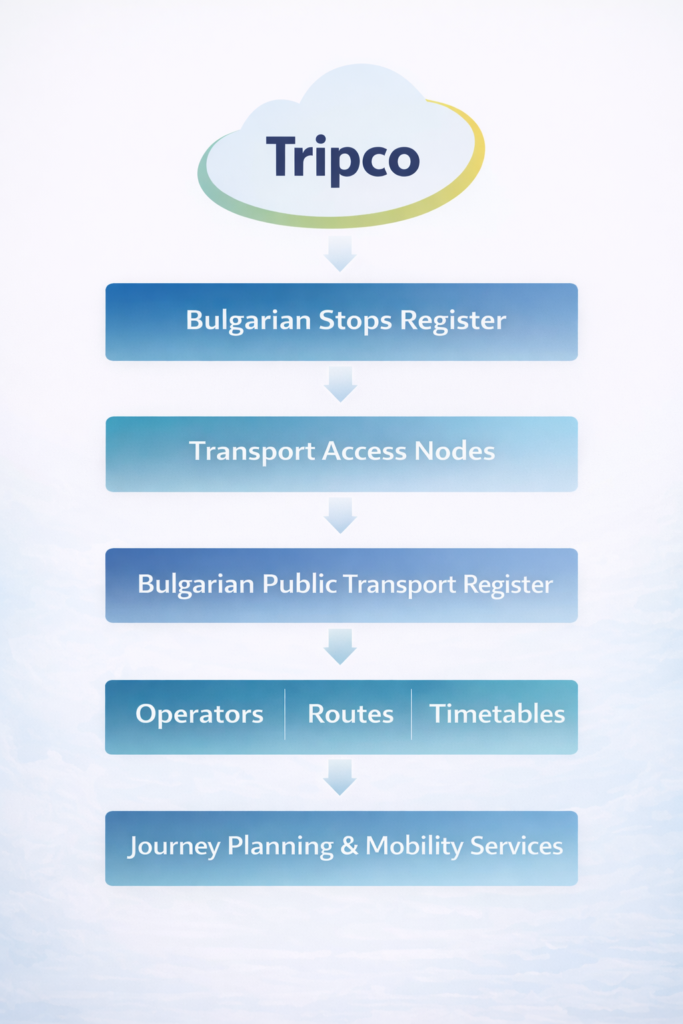
- public transport operators
- routes and service lines
- timetables
- service calendars
Together, these datasets form the digital infrastructure required for modern journey planning, passenger information systems, and multimodal mobility platforms.
Why Tripco Is Building This
Tripco’s goal is to improve connectivity and accessibility across Bulgaria through better use of public transport.
Reliable data infrastructure enables better journey planning, clearer information for passengers, and stronger integration between transport services. When public transport becomes easier to understand and use, it becomes a more attractive option for daily travel.
The Bulgarian Stops Register is a critical step toward building that future.
With more than 10,000 structured and validated stops, the dataset already represents the most comprehensive and standardised collection of transport access nodes in Bulgaria-and the foundation for the next generation of mobility services.
Looking Ahead
The development of the Bulgarian Stops Register marks an important step toward building modern mobility data infrastructure in Bulgaria. As the dataset continues to evolve, Tripco will continue working on the next stage: developing the Bulgarian Public Transport Register, enabling more advanced journey planning, data integration, and mobility services across the country.